

Blog
Bamboo Versus Polyester Activewear for Runners

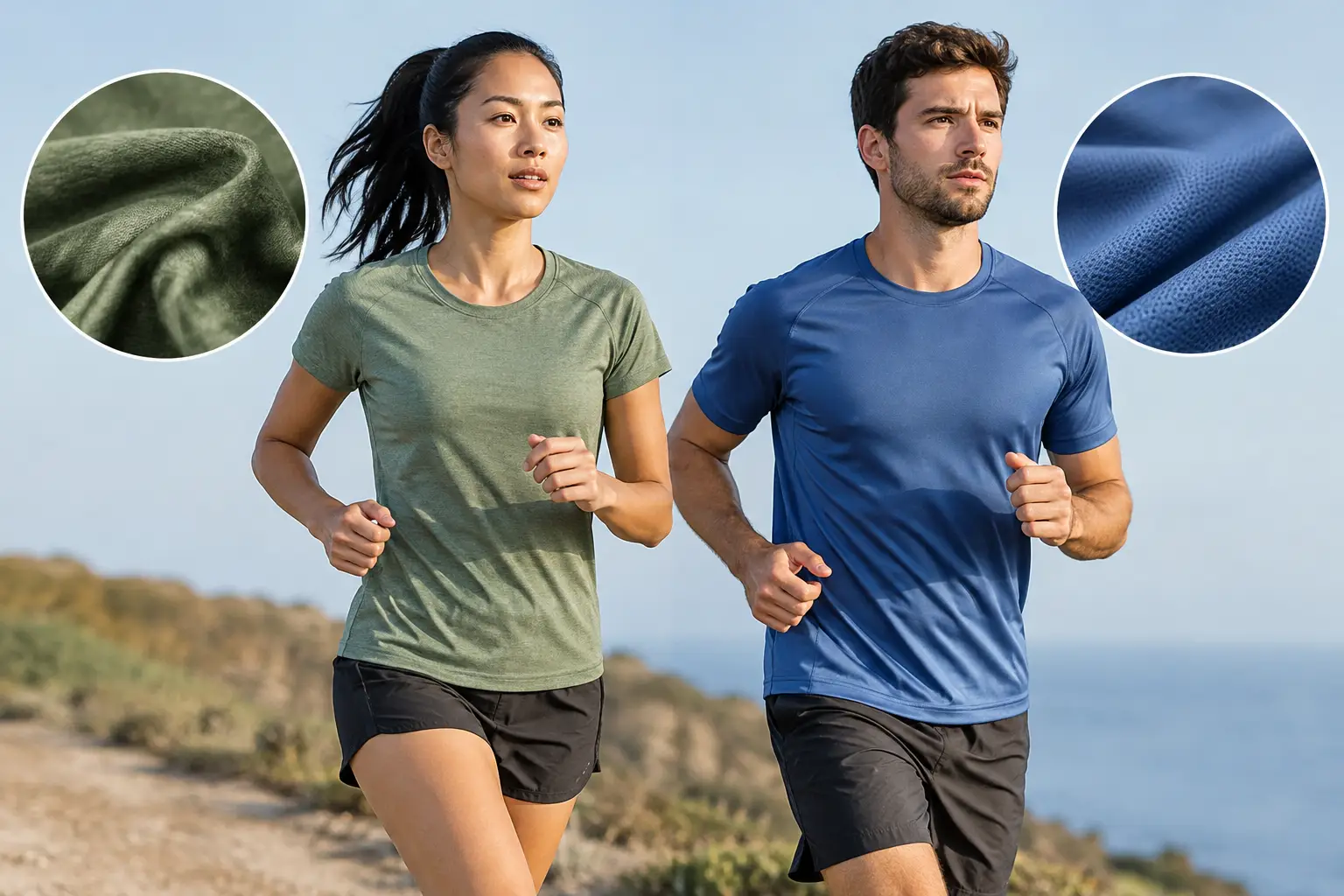
Your running top should be the last thing on your mind when the rain starts, the pace lifts or the miles stretch beyond plan. That is where bamboo versus polyester activewear becomes a real runner’s question, not just a fabric debate. One can feel brilliantly soft next to the skin. The other is built to shift sweat and dry quickly. Neither wins every run.
The right choice depends on how you train, how much you sweat, what the weather is doing, and whether the garment is made to last. For runners who are done with disposable sportswear, the most sustainable kit is not simply the one with the greenest-sounding label. It is the piece you wear hard, wash carefully and keep in rotation for years.
Bamboo versus polyester activewear: the runner’s reality
Bamboo activewear usually refers to fabric made from bamboo pulp, most commonly bamboo viscose or bamboo rayon. It is not the same as wearing a naturally soft bamboo stalk spun straight into a tee. The pulp must be processed into a usable fibre, and the environmental impact depends heavily on how that processing is managed.
Polyester is a synthetic fibre, often made from fossil-fuel-based materials, though recycled polyester can be made using existing plastic waste. It has long been a staple of technical running kit because it is light, hard-wearing and dries fast.
The simple version is this: bamboo-rich fabrics generally prioritise softness and everyday comfort, while polyester generally prioritises technical performance in wet, sweaty or changeable conditions. Fabric blends can offer a useful middle ground, but they also make recycling more difficult at the end of a garment’s life.
Comfort: bamboo has the softer feel
For easy miles, walks, strength sessions and recovery days, bamboo fabric can feel excellent. It is smooth, gentle and often less plasticky than a standard synthetic top. If you are prone to irritation around the neck, underarms or waistband, that softer hand-feel can make a meaningful difference.
Bamboo-based fabric can also feel comfortable in warmer conditions because it absorbs moisture readily. The trade-off is that absorbed moisture stays in the fabric for longer. On a humid run or a session where you are working hard, a bamboo-heavy top may feel damp and heavier against your skin than polyester.
That does not make it poor running clothing. It makes it better suited to certain runs. A relaxed 5K on a mild evening is very different from hill repeats in driving rain. Choose for the session, not the marketing claim.
Sweat and drying speed: polyester leads hard efforts
Polyester does not absorb much water into the fibre itself. Instead, well-designed technical fabric moves moisture across its surface, where it can evaporate. That is why a good polyester running top tends to dry quickly both during and after a run.
For tempo work, long runs, races and wet-weather training, this matters. A soaked top can rub, cool you down when you stop moving and leave you uncomfortable on the journey home. Fast-drying kit helps reduce that problem, particularly when paired with a fit that does not bunch or chafe.
Polyester is not automatically sweat-proof. A thick, badly cut polyester tee can still feel clammy, and a cheap finish may lose effectiveness after repeated washing. Look beyond the fibre name. Lightweight construction, sensible seams, breathable panels and a fit that lets air move all count.
Odour: the answer is not as clear-cut as it sounds
Polyester can hold on to body odour more stubbornly than natural or cellulosic fibres. The fibre’s structure gives odour-causing compounds somewhere to cling, especially if kit is left damp in a gym bag or washed at low temperatures with too much detergent.
Bamboo viscose is often favoured for its fresher feel, but it is not magic. Any fabric will smell if it is repeatedly worn, poorly dried or not washed properly. Be wary of sweeping antibacterial promises unless a brand clearly explains the treatment used and how long it lasts.
The practical move is simple: air your kit as soon as you finish, wash it when needed, avoid fabric conditioner, and let it dry fully. That routine can extend the useful life of either fabric and prevent a wardrobe full of tops that are technically intact but impossible to wear.
Durability: construction matters as much as fibre
Polyester is usually the tougher choice for high-friction running use. It resists shrinking, keeps its shape well and can cope with regular washing. That makes it a strong option for runners who train several times a week and need dependable kit that is ready again tomorrow.
Bamboo viscose can be less resilient when it is wet and may pill, stretch or lose its shape sooner if the fabric is lightweight or poorly made. Adding polyester, nylon or elastane can improve durability and stretch, but it changes the fabric’s end-of-life picture.
A garment that fails after a season is not a sustainable purchase, whatever its fibre content. Check the stitching around the underarms and hems, the quality of the elastic, and whether the fabric recovers after being stretched. Buy fewer pieces that can genuinely take the miles.
Watch for chafing, not just fabric labels
Chafing is often blamed on the material, but the real culprit may be a rough seam, a loose armhole, a wet waistband or a top that shifts under a hydration vest. Polyester’s quick-drying strength can help during long runs, while bamboo’s soft feel can be a benefit for lower-intensity sessions.
Test new kit on a shorter run before race day. Use anti-chafe balm where you know your skin needs support, especially in wet weather or over longer distances. There is no prize for suffering through gear that does not work for your body.
The sustainability question needs honesty
Bamboo grows quickly and can require fewer inputs than some conventional crops. That is the appealing part of the story. But turning bamboo into viscose can involve intensive chemical processing. Responsible production depends on controlled systems that recover chemicals and manage waste properly. Without transparency, “bamboo” alone tells you very little.
Virgin polyester relies on finite fossil resources. It also sheds microfibres during washing, which can enter waterways. Recycled polyester can reduce demand for new fossil-based material and put existing waste to use, but it still has shedding and eventual disposal challenges.
There is no clean, one-word answer. Responsible activewear means asking better questions: Is the garment built for repeated use? Is the fabric weight suitable for its purpose? Does the brand explain its materials honestly? Can you avoid buying three near-identical tops because one good piece was not enough?
From Newry, 4R backs the principle that performance kit should earn its place. Fast fashion has trained people to treat clothing as temporary. Runners can choose differently. A reliable top, visible gear for dark roads and accessories that solve a real problem are better than a drawer full of short-lived purchases.
Which fabric should you choose for your running?
Choose bamboo or a bamboo-rich blend when softness is your priority and your runs are generally easy to moderate in cool or dry conditions. It can also be a strong choice for everyday movement, travel, recovery and layering when you do not need maximum drying speed.
Choose polyester when you regularly run hard, train in rain, race, wear a running vest or need kit that can be washed and worn again quickly. It is especially practical for runners in changeable UK and Irish weather, where one run can include drizzle, wind and a burst of sunshine before breakfast.
For many runners, the smartest wardrobe includes both. Keep a durable, quick-drying polyester layer for demanding sessions and poor weather. Add a soft bamboo-rich option for gentler runs and the rest of active life. The aim is not to build a bigger kit collection. It is to build a smaller one that covers the runs you actually do.
Make either choice last longer
Wash activewear inside out on a cool cycle, skip fabric conditioner and avoid high heat where possible. Heat can damage elastic fibres, while conditioner can coat technical fabric and reduce its ability to move moisture. A washing bag can also help capture some synthetic microfibre shedding from polyester garments.
Do not leave sweaty clothing crumpled in a bag after a run. Hang it up, let it air and wash it before odour becomes embedded. When a garment finally reaches the end of its useful life, look for textile collection options locally rather than sending it straight to landfill.
Your best activewear is not defined by a single fibre. It is the kit that feels right at kilometre one, still performs at kilometre ten, and stays useful long after the next fast-fashion drop has been forgotten.