

Blog
Are Running Clothes Recyclable? The Honest Answer

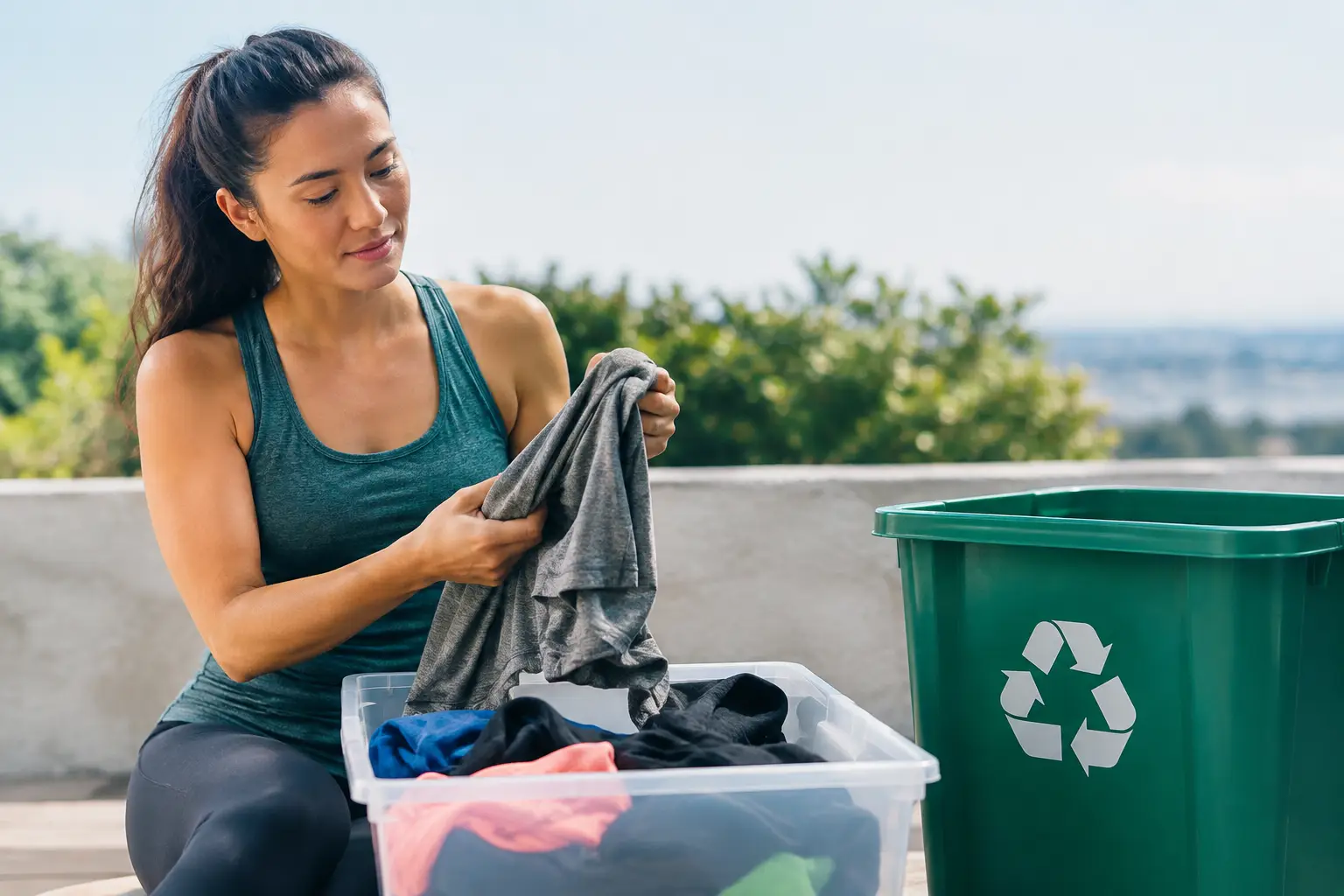
Your favourite running top has done the hard miles: rain-soaked 5Ks, early starts, long Sunday runs and the occasional wash-day emergency. When it finally loses its shape, snags beyond repair or stops performing, the question is fair: are running clothes recyclable?
The honest answer is: sometimes, but not easily. Most running clothing is made to stretch, wick sweat, dry quickly and survive repeated movement. Those performance benefits often come from mixed synthetic fibres, coatings, prints and trims that make conventional recycling difficult. That is not a reason to give up. It is a reason to buy more thoughtfully, use every item properly and choose the best end-of-life route available.
Are running clothes recyclable in the UK and Ireland?
Some running clothes can be recycled through specialist textile schemes, but they should not usually go into household recycling bins. Councils generally cannot process clothing alongside paper, glass and food packaging. Textile collection banks and charity shops may accept clean, wearable sportswear, while certain specialist schemes take damaged textiles for sorting or fibre recovery.
What happens next depends on the item. A clean, usable running jacket may be resold or donated. A worn-out cotton tee may be cut into industrial wiping cloths. Synthetic performance gear may be recycled in limited cases, but only if the collector has a route for that particular fabric mix.
This is the hard truth behind the green recycling symbol or the word “recycled” on a label: recyclable does not always mean widely recycled. Collection, sorting technology, local infrastructure and fabric design all decide whether an item gets a genuine second life.
Why performance kit is hard to recycle
Running clothing rarely consists of one simple material. A pair of leggings may combine polyester, elastane, nylon thread, printed logos, a drawcord, elastic waistband and reflective detailing. A lightweight shell can add a water-repellent finish, zip, mesh panels and bonded seams.
Each component has a job when you are running. Elastane helps clothing move with you. Polyester dries quickly. Reflective details help make dark-road runs safer. But separating those materials at scale is costly and technically difficult. Mechanical recycling works best with clean, single-fibre streams. Blended, dirty or highly decorated garments are much more challenging.
There is also the issue of fibre quality. Reprocessing textiles can shorten fibres and reduce their strength. That means recycled material is not always suitable for another high-performance running top without being blended with virgin material. Chemical recycling may eventually widen the options, particularly for polyester, but it is not yet a universal answer at the kerbside.
Check the label before you make a decision
The care label is your starting point. Look for fibre composition, then assess the actual condition of the garment. A 100% polyester top may have a better chance with a specialist recycling route than a polyester-elastane blend. Natural fibres are not automatically easy either, especially when mixed with synthetics or treated with finishes.
Do not assume a hole means the garment is finished. Small repairs can add months or years of use. A loose seam, missing drawcord or damaged zip is often fixable. If a top has lost its running-day comfort but is still clean and decent, it may be useful for walking, strength sessions, gardening or messy jobs at home.
Be honest about hygiene. Donations should be freshly washed, dry and wearable. Stained, damp or heavily worn kit can contaminate other textiles and create more work for sorting teams. Recycling is not a licence to pass rubbish on to someone else.
A practical order for worn running gear
Before throwing anything away, work through the options in this order:
- Keep using it if it remains safe, comfortable and fit for purpose.
- Repair it when the problem is a seam, zip, small hole or worn elastic.
- Pass it on through a charity shop, local running group or friend if it is genuinely wearable.
- Repurpose it as cleaning cloths, shoe bags, kit bags or padding for stored gear.
- Use a specialist textile scheme for items that cannot be worn again.
That hierarchy matters. Recycling uses energy, transport and processing. The most sustainable running top is usually the one already in your drawer, still getting used.
What should not be donated or recycled blindly
Some items need extra care. Underwear, heavily soiled gear and clothing contaminated with oil, paint or chemicals may not be accepted by textile collectors. Old socks are sometimes accepted, sometimes not. Shoes are a separate challenge because they combine foam, rubber, fabric, glue and plastic components.
Reflective vests, LED chest lights, rechargeable headlights and other safety accessories are not standard textiles. If a light no longer charges or works, check for electronic waste collection rather than placing it in a clothing bank. Batteries must be handled through the correct battery recycling route. Keeping runners visible is essential, but throwing electronics into general waste is not the answer.
If you are unsure, ask the collection point what it takes. A quick check prevents well-meant donations from becoming landfill further down the chain.
Buy for a longer running life
The strongest response to fast-fashion waste happens before checkout. Cheap kit that loses stretch after a handful of washes is not a bargain if it needs replacing twice as often. Durable running clothing can cost a little more at first, but value comes from how many comfortable, reliable miles it delivers.
Choose pieces you will actually wear often. A versatile long-sleeve layer that works for winter runs, walking and warm-ups earns its place. So does a well-made reflective layer that helps you train safely through darker months. Avoid buying three versions of the same item because a new colour appeared on your feed.
Fabric choices involve trade-offs. Recycled polyester gives existing plastic a useful new purpose and can reduce demand for virgin fossil-based fibres. Yet it can still shed microfibres and remain difficult to recycle again when mixed with elastane or trims. Natural fibres may be renewable, but they can require significant land, water and processing. There is no magic fabric. There are better decisions made with a full product life in mind.
At 4R, we believe runners deserve practical gear that performs without feeding disposable fashion. That means backing products designed for repeat wear, not a short-lived trend cycle. From Newry, Northern Ireland, that principle travels well: buy less, choose well and keep reliable kit moving for longer.
Make your kit last through the wash
Care is not glamorous, but it is one of the simplest ways to reduce waste. Wash running clothes only when they need it, follow the temperature guidance and turn printed or reflective pieces inside out. A cooler wash is often enough for synthetic technical fabrics and is kinder to fibres, elastic and finishes.
Skip fabric conditioner unless the care instructions specifically allow it. Conditioner can leave a coating that reduces moisture-wicking performance. Air-dry where possible rather than relying on high heat, which can damage elastane and shorten the life of stretch fabrics. Washing full loads and using a microfibre-catching device or bag can also help reduce fibre loss into waterways.
The goal is not to make your kit precious. It is there to be worn, sweated in and tested. The goal is to treat it well enough that it keeps showing up for the next run.
Ask better questions before buying
A responsible choice is not about chasing perfection. It is about refusing the throwaway mindset. Before adding new running clothing to your basket, ask whether you need it, whether it suits more than one session, how it should be cared for and what could happen to it at the end of its useful life.
Look for clear material information and brands willing to talk plainly about durability, recycled content and limitations. Be wary of vague claims that make an item sound planet-friendly without explaining what it is made from or how long it is built to last.
Your miles already prove that small, repeated actions add up. Apply the same thinking to your running wardrobe: wear what you own, repair what you can, pass on what still has life, and recycle through the right route when there is no better option. That is how a runner can push forward without leaving a trail of disposable kit behind.