

Blog
Running Safety Gear: The Complete Guide to Staying Seen and Safe on Every Run

Running Safety Gear: The Complete Guide to Staying Seen and Safe on Every Run
Running in low-light conditions doesn’t have to be dangerous, but it does require the right approach. Whether you’re heading out before dawn, after dusk, or during overcast weather, visibility becomes your primary safety concern. Without proper gear, you risk being overlooked by drivers, cyclists, and other road users who share your route.
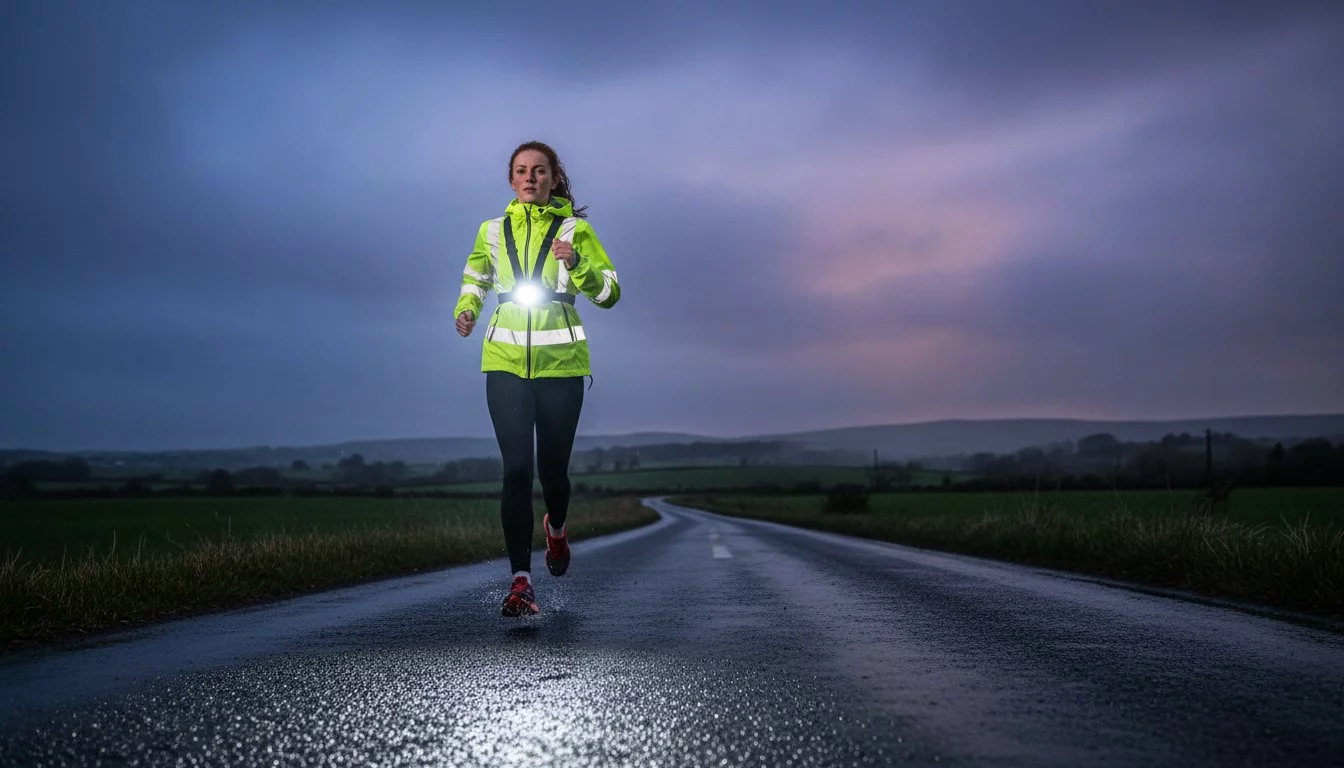
The key to safe running in low-light conditions is combining reflective clothing with active lighting to ensure you’re visible from all angles and distances. Reflective materials work by bouncing light back to its source, while active lights like headlamps and clip-on LEDs make you visible even when no external light is present. Together, these elements create multiple layers of visibility that significantly reduce your risk.
This guide covers the essential visibility gear you need to stay safe, along with advanced strategies for protecting yourself on every run. You’ll learn which items provide the most effective protection and how to use them correctly for maximum visibility in various conditions.
Essential Visibility Gear for Runners
Visibility gear transforms you from a shadow on the road into a clearly identifiable runner that drivers and cyclists can spot from hundreds of feet away. The right combination of reflective materials, active lighting, and high-visibility colors creates multiple layers of detection that work in various lighting conditions and weather scenarios.
Reflective Clothing Options
Reflective clothing uses retro-reflective materials that bounce light back toward its source, making you visible when car headlights hit you. Modern reflective running apparel includes jackets, tights, shirts, and shorts with reflective strips, panels, or all-over reflective fabric.
Key reflective clothing categories:
Fully reflective jackets that transform into bright beacons under headlights
Reflective panels strategically placed on shoulders, arms, and legs
Reflective trim on standard running clothes for subtle visibility enhancement
Reflective tights and leggings with 360-degree reflective elements
The placement of reflective materials matters significantly. Reflective strips on moving joints like ankles, knees, elbows, and wrists create a biological motion pattern that helps drivers recognize you as a human rather than a stationary object. This biomechanical recognition improves driver response times compared to static reflective patches alone.
LED Accessories and Lights
LED accessories provide active illumination that doesn’t rely on external light sources to make you visible. Clip-on LED lights, armbands, chest lights, and headlamps emit their own light, ensuring visibility even on unlit roads without traffic.
Rechargeable LED armbands and clip-on lights typically offer multiple modes including steady, slow flash, and rapid strobe settings. Strobe modes increase visibility by catching peripheral attention more effectively than steady lights. Many runners choose red LEDs for rear visibility and white or green LEDs for front visibility to follow traffic convention.
Essential LED gear includes:
Rechargeable chest lights that provide forward illumination and make you visible from the front
Clip-on strobe lights for attachment to clothing, bags, or shoes
LED armbands that wrap around arms or ankles with 360-degree visibility
Headlamps for trail running and illuminating your path
Battery life varies from 3 to 20+ hours depending on the mode and brightness level. USB-rechargeable options eliminate the need for replacement batteries.
High-Visibility Vests and Bands
High-visibility vests combine fluorescent fabrics with reflective strips to maximize detection in both daylight and low-light conditions. Fluorescent yellow, orange, and lime green materials remain visible during dawn, dusk, and overcast days when reflective materials alone aren’t sufficient.
Lightweight mesh vests designed for runners offer breathability while providing 360-degree visibility. Many feature adjustable straps to fit over various clothing layers and stay secure during movement without bouncing. Reflective bands offer a minimalist alternative, wrapping around your torso, arms, or legs with elastic or Velcro closures.
Vest and band features to consider:
Feature Benefit
Mesh construction Prevents overheating during intense runs
Adjustable fit Accommodates different clothing layers
Reflective strips Works with vehicle headlights
Fluorescent base color Visible in daylight and twilight
Reflective ankle and wrist bands create motion-based visibility patterns. These smaller accessories work well for runners who prefer minimal gear but still need to remain visible to traffic.
Advanced Tips for Staying Safe on the Run
Strategic planning around timing, routes, and equipment selection can significantly reduce risks during your runs. Modern safety devices offer runners an extra layer of protection beyond basic visibility gear.
Best Times and Routes for Safe Running
Running during daylight hours between sunrise and sunset provides the best natural visibility for both you and drivers. If you must run in darkness, stick to well-lit areas with consistent street lighting rather than sporadic illumination.
Choose routes with sidewalks or dedicated running paths whenever possible. High-traffic areas with consistent pedestrian activity offer more safety than isolated trails or empty streets. Familiarize yourself with your route beforehand, noting locations of businesses, emergency call boxes, and safe areas where you can seek help if needed.
Vary your running schedule and routes regularly to avoid predictable patterns. This practice reduces the likelihood of becoming a target for theft or harassment. For trail running, select maintained paths with clear markers and cell phone reception. Always inform someone of your planned route and expected return time.
Utilizing Personal Safety Devices
Personal alarms emit sounds ranging from 120-140 decibels when activated, loud enough to startle attackers and alert nearby people to your distress. Attach these lightweight devices to your waistband, keychain, or handheld water bottle for quick access.
GPS tracking apps allow designated contacts to monitor your location in real-time during runs. Many apps include features like automatic check-ins, emergency alerts, and route sharing. Road ID bracelets or shoe tags display critical medical information and emergency contacts if you’re incapacitated and unable to communicate.
Pepper spray designed for runners typically comes in handheld models with hand straps or belt clips. Check local laws regarding carry restrictions before purchasing. Some runners carry personal safety whistles as a lightweight alternative, though these produce less sound than electronic alarms.
Choosing the Right Gear for Weather Conditions
Cold weather requires layering with moisture-wicking base layers, insulating mid-layers, and wind-resistant outer shells. Protect your extremities with gloves, headbands, or hats, as significant body heat escapes through your hands and head. Reflective elements become even more critical during winter months when daylight hours are limited.
Hot conditions demand light-colored, breathable fabrics that allow sweat evaporation. Mesh panels in technical running shirts improve airflow and cooling. Carry water or plan routes with fountain access for runs exceeding 30 minutes in temperatures above 75°F.
Rain gear should balance water resistance with breathability to prevent overheating from trapped moisture. Water-resistant jackets with ventilation zippers allow temperature regulation while keeping you dry. Wear a brimmed cap to keep rain out of your eyes and maintain visibility.