

Blog
A Runner’s Guide to Recycled Fabric Claims

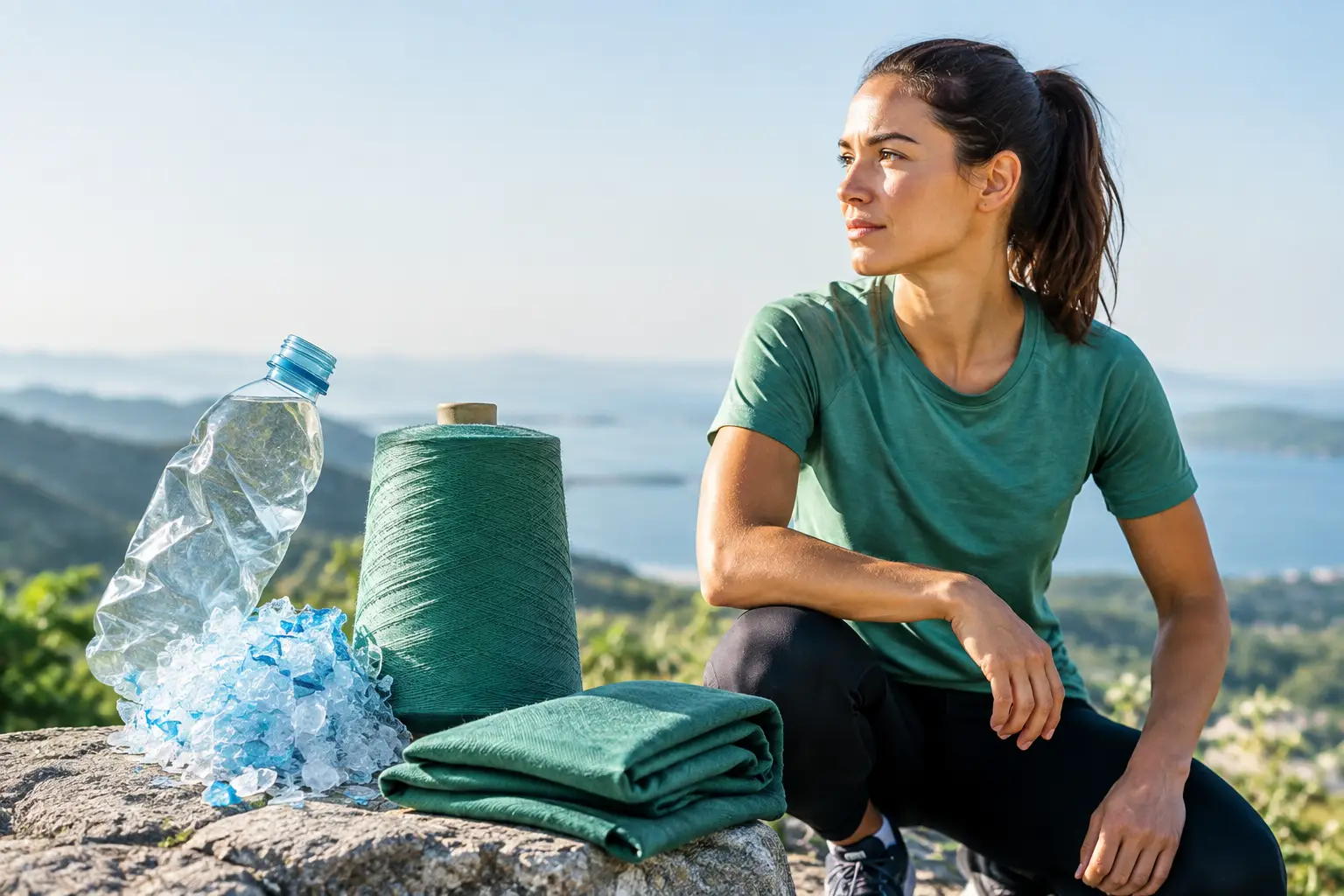
A green swing tag is not proof that a running top has earned its environmental claim. Our guide to recycled fabric claims is for runners who want kit that works through wet miles, hard sessions and repeated washes – without funding the throwaway fashion cycle.
Recycled fabrics can be a better choice, particularly when they keep existing materials in use and reduce reliance on virgin fossil-based fibres. But the word “recycled” alone does not tell you how much recycled material is in the garment, where it came from, or whether the claim applies to the whole product. That detail matters.
What a recycled fabric claim should tell you
A credible claim is specific enough to check. At minimum, it should say what material is recycled and state the percentage. “Made with recycled polyester” may be technically true if only a small panel, lining or trim contains recycled content. “Made from 85% recycled polyester” gives you something useful to judge.
For running clothing, look at the fibre breakdown rather than stopping at the headline. A lightweight tee might be 90% recycled polyester and 10% elastane. That is a clear, reasonable claim. The elastane helps stretch and shape retention, but it also means the garment is not 100% recycled and can be harder to recycle again at end of life. That is not a reason to reject it. It is a reason to buy with open eyes and make the piece last.
The wording should also make clear whether the percentage refers to the fabric, the garment or a particular component. Zips, reflective prints, labels, elastic waistbands and stitching can all use different materials. No running brand should imply that every element is recycled when only the main body fabric is.
Pre-consumer and post-consumer recycled content
Recycled content generally comes from two routes. Pre-consumer material is factory offcut, yarn waste or production scrap recovered before it becomes a finished consumer product. Post-consumer material comes from products used and discarded by people, such as plastic bottles, worn textiles or packaging.
Neither term automatically makes one option perfect. Recovering factory waste is worthwhile, but it may be easier and cleaner to process than waste collected from households. Post-consumer recycling can help deal with materials already in circulation, yet sorting, cleaning and processing it takes energy and infrastructure.
The strongest product descriptions say which route is used where that information is available. Be cautious when a brand makes a big environmental promise but leaves the source of its recycled content completely undefined.
A guide to recycled fabric claims: the checks that count
You do not need to become a textile auditor before buying a running vest. You do need to slow down when the language gets vague. Claims such as “eco-friendly”, “earth-conscious” or “sustainable fabric” can describe an intention, not a measurable fact.
Start by looking for the material composition. In the UK, garments should identify their fibre content. This is the baseline, not a gold star. Then look for the recycled percentage and the specific fibre involved, such as recycled polyester or recycled nylon.
Next, check whether an independent certification is named. Certifications can provide valuable chain-of-custody checks, tracing recycled material through stages of production. A serious brand should be able to say what certification applies and whether it covers the material itself, the finished product, or both. A logo with no explanation is weaker than a plain-English statement of what has been verified.
Finally, assess the whole claim against the product. If a jacket is promoted as recycled but its description only mentions a recycled lining, the headline is doing too much work. If the recycled content is clearly stated and the product is designed for years of use, that is a much more meaningful proposition.
Watch for “bottle” shortcuts
“Made from plastic bottles” is memorable marketing, but it is incomplete. Bottles can be processed into recycled polyester, which is widely used in sportswear because it is light, quick-drying and durable. Yet a bottle-to-shirt story does not explain the percentage of recycled content, the processing method or the garment’s eventual end of life.
It can also create the impression that every bottle is best turned into clothing. In reality, some bottles may be suitable for closed-loop bottle recycling, while textile recycling needs more investment and better collection systems. The honest position is simpler: recycled polyester can be a useful lower-impact material choice, but it is not a permission slip for disposable buying.
Performance still comes first on the run
A sustainable claim has limited value if the garment sags, chafes, loses its shape or needs replacing after one season. Runners need fabric that manages sweat, dries quickly, handles friction from packs and waist belts, and stays comfortable mile after mile.
Recycled polyester often performs similarly to virgin polyester in running kit. The exact result depends on yarn quality, knit construction, garment design and finishing, not only the word “recycled” on the label. Recycled nylon can bring strength and abrasion resistance, useful in tights, outer layers and accessories. Recycled cotton can feel soft, but it is usually less suited to high-sweat training because it holds moisture for longer.
Blends are common for good reasons. A small amount of elastane can make a fitted running layer more functional. A blend of fibres may improve comfort or durability. The trade-off is that mixed fabrics are more difficult to separate and recycle later. For everyday runners, the best answer is usually not chasing theoretical purity. It is choosing fewer pieces that fit properly, perform reliably and remain in rotation for years.
Durability is part of the environmental claim
A recycled fabric garment that lasts for 100 runs is generally a stronger choice than a poorly made alternative that lasts for ten. Longevity reduces replacement purchases, packaging, transport and the pile of tired activewear at the back of the drawer.
Before buying, look beyond fabric content. Check whether seams are positioned away from high-friction areas, whether reflective details are integrated properly, and whether the garment has a purpose you will genuinely use. A versatile long-sleeve layer that works for winter road runs, trail mornings and warm-ups can earn more wear than a highly specialised item bought on impulse.
Care matters too. Wash technical clothing at a lower temperature when the care label allows, avoid unnecessary tumble drying, and do not overuse fabric softener. It can affect moisture-wicking finishes. Air-drying also helps preserve elastic fibres and prints. Small habits keep dependable kit out of the bin for longer.
Questions worth asking before you buy
If a product page leaves you uncertain, ask direct questions. What percentage of the main fabric is recycled? Is the claim based on the fabric or the full garment? Is there independent certification behind it? What is the blend, and why was it chosen? How is the product built to last?
A brand that takes ethical production seriously should not treat these as awkward questions. Clear answers build trust. Evasive language tells its own story.
At 4R, based in Newry and built for runners who expect more from their gear, we believe performance and responsibility belong in the same kit bag. Cheap, short-lived sportswear is not a bargain when it lets you down halfway through its useful life.
Choose the claim with evidence behind it, then choose the garment you will wear again next week, next season and on the mornings when getting out the door takes real effort. That is where better running kit starts to make a difference.